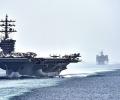
Which are the world's most vital straits, important to shipping?

Gold and silver prices saw a significant decline in the national capital, with silver falling by Rs 7,800 to Rs 2.43 lakh per kilogram and gold by Rs 1,500 to Rs 1.54 lakh per 10 grams, as investors booked profits amid persistent doubts over the durability of the West Asia ceasefire.

The measures announced by it risk backfiring, disrupting the foreign exchange market, and intensifying the very pressures they seek to contain, with broader consequences for the economy points out Rajeswari Sengupta.

Gold prices experienced a significant drop in futures trading due to global selloff, inflation concerns, and a strong US dollar. Analysts predict a continued downward trend amid geopolitical tensions and potential rate hikes.

India has denied making any payments to Iran to secure safe passage for its vessels through the Strait of Hormuz, following reports that Indian vessels were fired upon in the region.

Rupee slumped 69 paise to an all-time low of 92.18 against the US dollar in early trade on Wednesday, as a sharp spike in crude oil prices amid geopolitical tensions following the escalation of the US-Iran conflict weighed on investor sentiment.

10 stocks from the Nifty 200 index that offer good growth potential and scope to deliver decent returns from current levels, based on brokerage estimates.
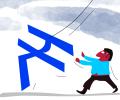
The rupee plunged to a fresh low of 93.72 against the dollar on Friday, falling 1.15 per cent in a single session - its sharpest one-day decline since February 24, 2022 - as elevated crude oil prices and strong dollar demand from oil-marketing companies and foreign portfolio investors (FPIs) weighed on the currency.

'The West Asia or the Gulf crisis has shown that what we develop as national infrastructure when things are not as bad as they could be, we forget to plan for adversities.'

The US blockade on Iranian ports is aimed to curb Iranian energy exports, thereby crippling its economy to force Iran back to the negotiating table, points out Commodore Venugopal Menon (retd).
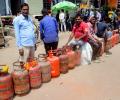
The Indian government has implemented several measures to mitigate external risks, support the balance of payments, and maintain macroeconomic stability amidst the ongoing West Asia crisis, according to Minister of State for Finance Pankaj Chaudhary.

Indian equity benchmarks, Sensex and Nifty, ended lower after a spectacular rally, with the Sensex tumbling 931 points, as renewed tensions in West Asia, particularly the risk to the ceasefire deal after Iran closed the Strait of Hormuz, dampened investor optimism.

China and Pakistan have jointly proposed a five-point peace plan to address the ongoing conflict in West Asia, focusing on de-escalation and safe passage through the Strait of Hormuz.

Indian markets on Dalal Street rallied sharply as easing tensions in the US-Iran conflict and stable oil prices boosted sentiment. Track Nifty 50 and BSE Sensex performance and key global triggers.

'So far our production is not affected. But every day the situation prolongs, it does bring risks in terms of shipments getting delayed.'
Delhi Police have dismantled a fake auto parts racket operating in Karol Bagh, arresting two individuals and seizing counterfeit spare parts valued at Rs 25-30 lakh.

The cost of the war is being counted not in the corridors of power in Washington or Tehran, but in Firozabad's darkened furnace rooms, Howrah's idle casting sheds, and a barbershop in Kochi where the wait is suddenly, inexplicably, an hour long, notes Prem Panicker in his must read blog on the Iran War.

Putin's State visit will centre on fixing the huge India-Russia trade imbalance, with both sides pushing to lower duties, ease non-tariff barriers, and seal a landmark mobility pact to send more Indian workers to Russia.

Indian equity markets experienced a significant downturn, with the Sensex and Nifty plummeting due to rising crude oil prices, geopolitical tensions in West Asia, and continuous foreign fund outflows.

Indian stock market indices Sensex and Nifty experienced a significant drop in early trade, reversing a three-day rally. The decline was triggered by a sharp increase in crude oil prices, weak global market trends, and continuous outflows of foreign funds.

The Indian rupee weakened against the US dollar due to rising crude oil prices, geopolitical tensions in the Middle East, and foreign fund outflows.

Nobody takes Pakistan seriously and therefore Pakistan's sudden mediating with almost immediate results of a ceasefire seems more contrived than real, points out Vice Admiral Biswajit Dasgupta (retd).

Amid rising tensions in West Asia, China is urging all parties to cease military operations, following Trump's appeal for help in securing the Strait of Hormuz.

The big question is whether Trump is any longer in command of the situation. For all practical purposes, the war seems set to cascade as the US is preparing for a potential ground operation in Iran and threatens to destroy 'bridges next, then electric power plants', points out Ambassador M K Bhadrakumar.

In a sharp escalation of regional tensions, US President Donald Trump issued a fresh warning to Tehran on Monday, asserting that the American military is prepared to sink any Iranian vessels that approach the newly established naval blockade in the Strait of Hormuz.

An Indian-flagged crude tanker safely departed from the UAE's Fujairah after loading oil, despite an attack on the oil terminal. The Indian government is closely monitoring the situation in West Asia to ensure stable fuel supplies and maritime safety.

In the present hyper-connected world, there are many domestic and global factors that affect financial markets. Of them, the most powerful and often least predictable are geopolitical events, which often boil down to one diplomatic headline.
Indian stock market benchmarks Sensex and Nifty rebounded strongly after a two-day decline, driven by falling crude oil prices and positive global cues amid hopes of de-escalation in the Middle East.

China has denied any links to the Iranian cargo ship seized by the US in the Gulf, which allegedly contained chemical materials for manufacturing missiles. The denial follows allegations by former US envoy to the UN Nikki Haley, who claimed the ship was headed from China to Iran.

Indian equity markets experienced a volatile session, with the Sensex and Nifty recovering some ground after a significant plunge the previous day. Gains were driven by PSU bank, IT, and metal stocks, but concerns over rising fuel prices and geopolitical tensions limited the recovery.

Indian benchmark indices Sensex and Nifty surged over 1 per cent, with the Sensex jumping 918.60 points, driven by strong buying in banking and financial counters and a positive trend in global equities, fuelled by hopes of easing West Asia tensions.

From the 30-Sensex firms, Tata Steel, Kotak Mahindra Bank, Reliance Industries, Axis Bank, Titan and Trent were among the biggest gainers. However, Tata Consultancy Services, Tech Mahindra, Infosys, Bajaj Finance and Sun Pharma, were the laggards.

From the 30-Sensex firms, InterGlobe Aviation, Sun Pharma, Asian Paints, Reliance Industries, Hindustan Unilever, and Tata Steel were among the biggest laggards. However, Trent, UltraTech Cement, Maruti, and Power Grid were among the gainers.

Indian markets on Dalal Street rallied sharply as easing tensions in the US-Iran conflict and stable oil prices boosted sentiment. Track Nifty 50 and BSE Sensex performance and key global triggers.

Karex, the Malaysian company that makes roughly one in five of the world's condoms -- about five billion a year, supplying Durex and Trojan among others -- announced this week that it is raising prices by up to 30 percent. The reason is the Strait of Hormuz.

India's new manufacturing project announcements more than halved in the fourth quarter of FY26, falling 60 per cent sequentially and 78 per cent year-on-year to approximately 1.7 trillion, driven by global uncertainties, geopolitical conflicts in West Asia, and existing unutilised manufacturing capacity.

Foreign brokerages have started to cut their year-end targets for the Nifty 50 index amid the ongoing West Asia conflict.

Goldman Sachs has materially lowered its earnings growth forecast for Indian companies by a cumulative 9 percentage points over the next two years.
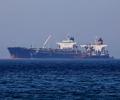
Iranian forces fired upon three commercial vessels in the Strait of Hormuz, with one possibly headed for Gujarat, raising concerns about maritime security in the strategic waterway.

India has protected the interest of domestic farmers and MSMEs by not extending any duty concessions on products across several sectors, including agricultural items such as dairy, as well as chocolates, gold, silver, jewellery, footwear, and sports goods, under the trade pact with Oman.
